
Designer Necklace Guide: Choosing a Piece with Lasting Presence
What makes a designer necklace feel considered long after its first impression fades? A product page may show the silhouette but offer little context for judging proportion, design, or how naturally a striking piece fits into everyday dressing. The distinction between designer fashion jewelry and fine jewelry can feel just as difficult to read.
It’s reasonable to look beyond the label. A necklace earns its place through thoughtful design, a sense of balance, and the ease with which it works across more than one occasion. The right choice can feel distinctive without being difficult to wear.
This guide offers a practical way to assess those qualities. You’ll learn what to notice in a necklace’s design, how to compare different forms, and how to consider versatility alongside personal style. We’ll also clarify the difference between fashion and fine jewelry, then explore how a curated edit, such as the necklace selection at Fashique Lux, can help bring the choice into focus.
Key Takeaways
- Look beyond price, trends, or labels to assess the proportions and silhouette that give a designer necklace its character.
- Compare pendant, chain-led, and expressive forms by their visual effect and the clothing they’re most likely to complement.
- Consider the occasions you dress for and how naturally a necklace could work with pieces already in your wardrobe.
- When shopping online, use the listing details and imagery to evaluate dimensions, materials, care notes, and appearance.
- Explore Fashique Lux’s curated necklace edit as a focused way to consider options alongside other fine jewelry and accessories.
What Makes a Designer Necklace Feel Distinctive?
A designer necklace isn’t defined by price, a passing trend, or a prominent label alone. Its distinction comes through in the decisions that shape its appearance: proportion, silhouette, detail, and the relationship between its elements.
A designer necklace is a piece whose character is expressed through deliberate proportion, a coherent silhouette, and a considered balance of detail. That definition offers a more useful starting point than prestige alone. A restrained design can feel distinctive through its line and scale; a more expressive one can create presence through a focal point. Neither needs to follow a trend to feel considered.
Designer necklace or fine jewelry: what is the difference?
These terms describe different ways of categorizing jewelry, not automatic levels of quality. “Designer” points to design authorship or identity. “Fine jewelry” generally describes a category associated with the materials and construction of a piece. The categories can overlap, but one term doesn’t establish the other.
Materials and construction vary from piece to piece. A label alone doesn’t tell you what a necklace is made from, how its details are finished, or how it is assembled. Read the individual item description for stated materials and construction details, and distinguish those facts from what the design merely suggests. For broader context on the history and types of necklaces, the form has a long visual vocabulary, from simple strands to designs centered on a pendant.
Which design details shape a necklace’s character?
Start with the outline. A close-fitting form reads differently from a longer line, even before you consider its material or decoration. Then look at visual scale: does the necklace sit quietly against clothing, or does it command attention? Neither effect is inherently better. The useful question is whether that level of presence feels right for the way you dress.
A pendant creates a focal point. Its size, shape, and position influence how the eye moves across the design. In a chain-led necklace, the chain itself carries more of the visual interest, so its links and overall line matter. For designs with multiple details, consider whether those elements feel balanced or compete for attention.
- Silhouette: Notice the overall outline and where the necklace sits.
- Visual scale: Consider how its proportions relate to your neckline and clothing.
- Balance: Compare the visual weight of a pendant or decorative feature with the chain around it.
Finishing and construction also shape first impressions. Clean joins, consistent surfaces, and neatly integrated details can make a design appear more resolved. They’re visual cues, not a promise of long-term performance. Assess the necklace as a whole: when its scale, line, and details feel in agreement, its character tends to read clearly.
Necklace Silhouettes and Proportion: Find the Design That Feels Right
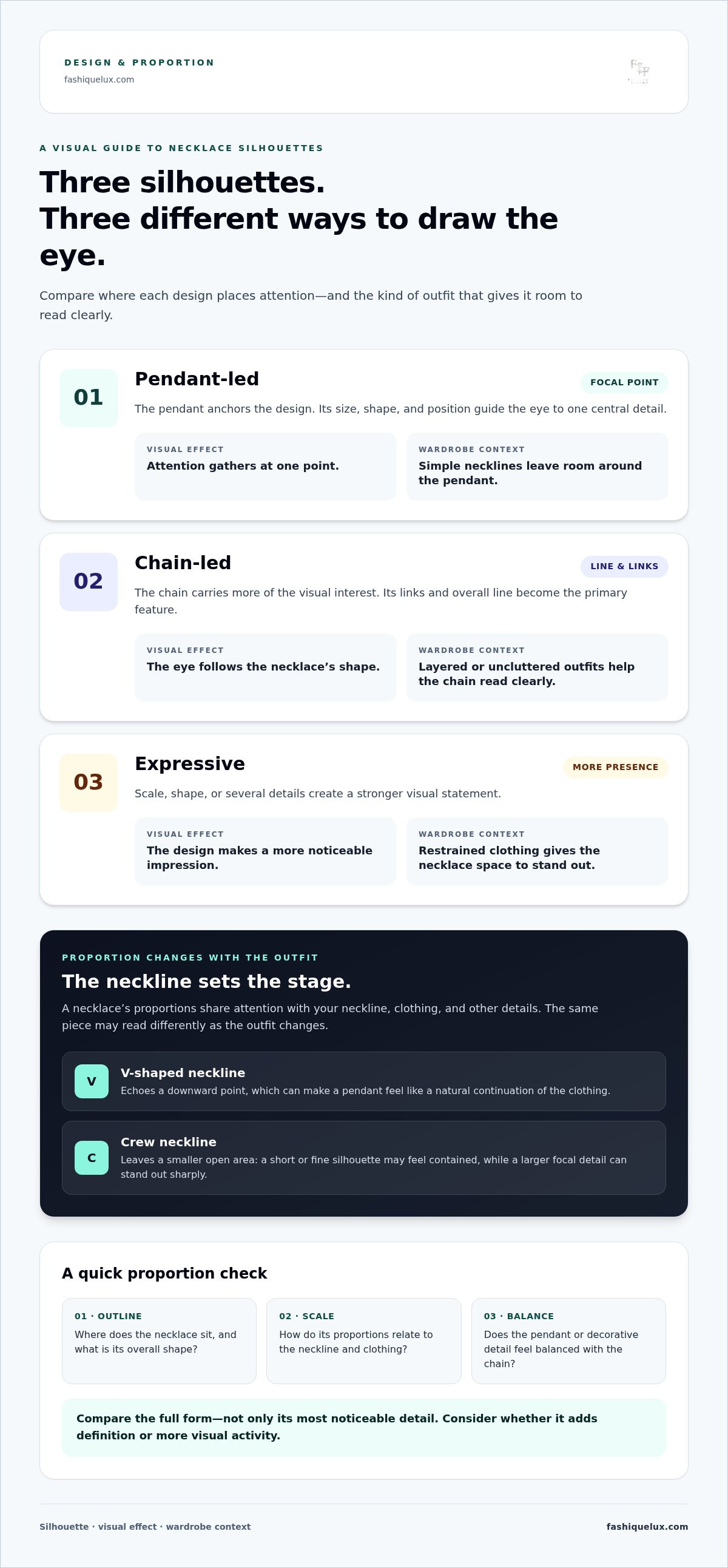
A necklace’s silhouette sets its first impression. Some forms draw the eye to one central detail; others make the line of the chain itself the focus. More expressive designs use scale, shape, or several elements to create a stronger visual statement. Thinking in broad forms makes it easier to compare a designer necklace by how it reads, not just by its category name.
Proportion determines how a necklace shares attention with the wearer’s neckline, clothing, and other details. A piece can feel subtle against a clean, open neckline and more prominent against a high or patterned one. The same necklace may read differently as the outfit changes.
| Silhouette | Visual effect | Likely wardrobe context |
|---|---|---|
| Pendant-led | A focal detail draws the eye to one point. | Simple necklines that leave room around the pendant. |
| Chain-led | The line, links, or overall shape carries the design. | Layered or uncluttered outfits where the chain can read clearly. |
| Expressive | Scale or multiple details create more visual presence. | Restrained clothing that gives the necklace space to stand out. |
Pendant-led and chain-led designs
A pendant-led silhouette concentrates attention. The pendant acts as an anchor, while the chain creates space around it and guides the eye toward the focal detail. Consider where that detail falls in relation to the neckline. If fabric, a collar, or another accessory sits close by, the pendant may have less visual breathing room.
In a chain-led design, the necklace’s line becomes the primary feature. The eye follows the chain rather than settling on a single focal point. Negative space matters here, too. A simple outline can feel crisp against a plain top, while additional detail along the chain makes the overall composition busier. Look at the full form, not only its most noticeable element.
Scale, neckline, and visual balance
Necklines change how much of a necklace is visible and where its shape appears to begin and end. A V-shaped neckline echoes a downward point, which can make a pendant feel like a natural continuation of the clothing. A crew neckline leaves a smaller open area, so a short or fine silhouette may appear more contained, while a larger focal detail can stand out sharply.
For a restrained pairing, match a quiet neckline with a necklace whose scale doesn’t compete with the garment. For a more noticeable focal point, let the clothing stay visually simple so the necklace has room to register. With prints, collars, or layered details, consider whether the necklace adds definition or simply adds more visual activity. A quick mirror check helps: step back and notice what your eye sees first.
As you explore Fashique Lux’s curated necklace selection, use silhouette and proportion as a first filter. The right form should feel in balance with the way you dress.
How to Compare Designer Necklaces for Versatility and Occasion
A necklace can feel compelling at first glance and still spend most of its time unworn. The more useful test is whether its visual impact works with the clothes you already reach for and with the settings that actually fill your calendar. In Florida, that might mean moving between a relaxed daytime lunch, a cultural event, and an evening gathering. The right choice depends on your routine, not an imagined occasion.
Compare three things: how strongly the necklace draws attention, how easily it fits your wardrobe, and how often you can picture wearing it. A prominent design may feel perfect for a particular event. A more restrained one may move through different settings with less effort. Neither is automatically the better choice. Look for a match between the piece and the life you lead.
A simple versatility test before choosing
Picture the necklace with several outfits you already own: a familiar daytime look, something you wear to work or meet friends, and a more polished evening ensemble. Notice whether the piece complements each outfit or requires you to build a whole look around it. A designer necklace with a clear focal point may bring definition to simple clothing, while a detailed top may call for a quieter companion.
Then consider formality. Would you feel at ease wearing it to an ordinary lunch, or does it make sense mainly for a planned celebration? Imagined occasions can make almost any piece seem useful. Your actual wardrobe is a more reliable guide.
- Repeat wear: Name the outfits you can realistically pair with it.
- Visual impact: Decide whether it adds a considered accent or dominates the look.
- Occasion range: Think about the settings you attend, from casual daytime plans to more formal evenings.
If the necklace works with more than one familiar outfit and feels appropriate for the occasions you attend, it has a stronger place in your rotation. If it only works in a scene you rarely encounter, pause before letting first impressions decide.
Choosing a necklace for gifting
For a gift, begin with the recipient’s existing style rather than your own. Notice the necklines they wear, whether their jewelry tends to be discreet or visually prominent, and how much detail they usually prefer. A person who favors simple clothing and minimal accessories may welcome a focused design; someone who often wears layered or expressive looks may be drawn to a piece with more presence.
Existing jewelry offers useful clues. Observe whether they reach for pendants or designs where the chain leads, and whether their usual pieces feel delicate or noticeable. These patterns won’t dictate a single answer, but they can help narrow the direction. At Fashique Lux, the curated necklace edit offers a considered place to explore options with the recipient’s everyday style in mind.
A Practical Checklist for Choosing a Designer Necklace Online
Online, a necklace is presented through images and written details. Make a clear choice by reading both carefully. Start with how you expect to wear it, then assess the design and the information the listing provides. This keeps the decision grounded in your wardrobe rather than assumptions about what a label or photograph might imply.
Use these five questions to narrow your options:
- Where will you wear it? Picture settings you genuinely attend, from everyday plans to more polished occasions. A piece intended for regular wear may need to work with several familiar looks.
- How often is it likely to leave your jewelry box? Think about your routine and the clothes you reach for, not only a special event you might attend one day.
- Does its silhouette suit your wardrobe? Consider whether a pendant, chain-led line, or more expressive form feels at home with your usual necklines and outfit shapes.
- Is the scale in balance? Ask whether the necklace adds definition, blends into the look, or takes more attention than you want it to. Your preference is the measure.
- What does the listing state? Review the dimensions, materials, and care guidance provided. Treat these details as facts about the item, not as clues to fill in gaps.
Once a design feels right, compare similar options by placing their stated details side by side. Note differences in dimensions, listed materials, and visible placement of decorative elements. If one listing gives a measurement and another doesn’t, don’t assume they’re the same size. Keep the comparison to what you can observe or read.
Product imagery adds context, but it isn’t a substitute for specifications. Look at every view provided. A front view may show the overall silhouette, while another angle can reveal how details sit along the chain. Notice the proportions within the image, but remember that styling, camera angle, and display can affect how scale appears. Avoid inferring weight, clasp type, finish, or construction unless the listing states it.
The distinction matters. A photograph can suggest a surface appearance, but it can’t establish the material. A close view may show where a pendant sits, but it doesn’t confirm a measurement. Use images to understand the design and the item description for stated specifications. If a detail isn’t provided, leave it unknown rather than turning an impression into a claim.
With this checklist in mind, explore Fashique Lux’s curated necklace edit and compare each option through the lens of intended wear, design, and the item details.
Explore Fashique Lux’s Curated Designer Necklace Edit
Choosing a necklace becomes more intuitive when the edit feels considered. Fashique Lux is an online destination for curated luxury accessories and fine jewelry, including necklaces. Rather than approach browsing as a search for a label alone, bring the framework from this guide: silhouette, proportion, visual presence, and the way a piece could work with your wardrobe.
Browse with a point of view
Begin with the outline that caught your attention. Is it a pendant-led form, a chain-led design, or a more expressive silhouette? Then consider its scale in relation to the necklines you wear most often and the level of detail you prefer. These questions create a useful filter, helping you focus on a designer necklace that feels relevant to your personal style rather than simply striking in isolation.
Curation offers a way to explore jewelry and accessories with a defined point of view. Fashique Lux’s online shop includes broader edits such as The New Edit, The Curated Meta Edit, and Best Sellers. Use them as part of the wider browsing experience, then return to the necklace category with your own criteria in mind.
Keep the intended use clear as you browse. A piece considered for frequent wear may need to sit comfortably within familiar outfits; one chosen for occasional dressing can bring a different kind of presence. Neither purpose is more discerning. The thoughtful choice is the one that aligns with how you expect to wear it.
Make the final choice feel considered
Before deciding, pause at the individual listing. Read the product description and review its stated specifications, such as dimensions, materials, or care guidance. Use the imagery to understand the visible design, while keeping visual impressions separate from details the listing explicitly states. A composed final review can make the difference between a passing attraction and a choice that feels personal.
- Return to the design: Does the silhouette still appeal after you’ve considered its proportions?
- Picture real wear: Can you imagine it with clothing and occasions already part of your life?
- Keep to the details: Let the product description inform what you know about the piece.
The final measure is not how many occasions you can imagine, but whether the necklace feels at home in your own style. Let visual appeal and intended wear lead; let the item details complete the picture. Explore the Fashique Lux necklace edit at your own pace.
Choose a Piece That Feels Like Your Own
Let your next choice begin with a simple question: does this design feel like something you’ll reach for, not merely admire? A designer necklace can become part of your personal style through the way you choose to wear it, with familiar clothes, for a meaningful occasion, or simply because it feels right that day.
At Fashique Lux, you can shop necklaces alongside curated luxury accessories and fine jewelry. Approach the edit with your own point of view. Notice what draws you in, then consider whether that appeal belongs in your everyday wardrobe or in the moments you want to mark.
There’s no need to rush toward the most noticeable option. A considered choice is one that feels compelling now and still feels like you later. Explore Fashique Lux’s curated necklace edit to find a design that invites its own place in your style.
Frequently Asked Questions
What makes a necklace a designer necklace?
A designer necklace reflects a design identity or point of view, but the term alone doesn’t establish its materials or construction. Look for the designer or brand attribution, then assess the individual piece through its listed details and appearance. The phrase isn’t a universal technical grade. A thoughtful choice comes from understanding what the listing states, rather than treating “designer” as shorthand for a specific price or specification.
Are designer necklaces always made with precious metals or gemstones?
No. “Designer” describes a design identity, not a required material. A necklace may use precious materials, other materials, or a combination, depending on the individual piece. Read the product description for named materials instead of inferring them from a brand or visual appearance. If a gemstone or metal isn’t identified in the listing, don’t assume it’s present, even if a photograph suggests a particular look.
How can I tell whether a necklace will suit my neckline?
Use a garment you already own as a reference. Hold a necklace or a piece of string against its neckline and note where the line falls in relation to the fabric. A collar, high neckline, and open neckline each leave different amounts of visible space. If shopping online, compare the stated necklace dimensions with this reference rather than relying on a styled photograph alone.
Can a designer necklace work for both daytime and evening?
Yes, if its design feels at ease with the clothes and settings you move between. Try imagining one necklace with a daytime shirt and then with a more polished evening outfit. A simple change, such as opening a collar or switching to a darker top, can alter how the same piece reads. In Florida, social plans can range from casual daytime outings to evening events, but your own calendar is the best guide.
How should I store a necklace to help prevent tangling?
Store each necklace separately, with the chain laid flat or secured in its own compartment or pouch. Fasten the clasp before putting it away, and avoid placing loose pieces together in a drawer or travel case. For a trip across Florida, a small divided jewelry case can keep chains apart in transit. Untangle gently with your fingers on a flat surface; pulling can tighten knots.
How do I care for a designer necklace?
Follow the care instructions provided for the specific piece, since suitable care can vary by material and construction. As a cautious routine, remove a necklace before applying lotions or fragrance, and wipe it gently with a soft, clean cloth after wearing. In Florida’s humid climate, let it dry fully before storing it separately. Avoid household cleaners or soaking unless the product’s care guidance specifically permits it.
Is a pendant necklace different from a chain necklace?
A pendant necklace features a distinct element suspended from a chain, creating a focal point. In a chain necklace, the chain itself is the central visual feature, with its line or links defining the look. Some designs may combine both qualities. Don’t assume a pendant can be removed or swapped; that depends on the particular construction, so rely on the product description for such details.


Leave a comment